▶ TLDR
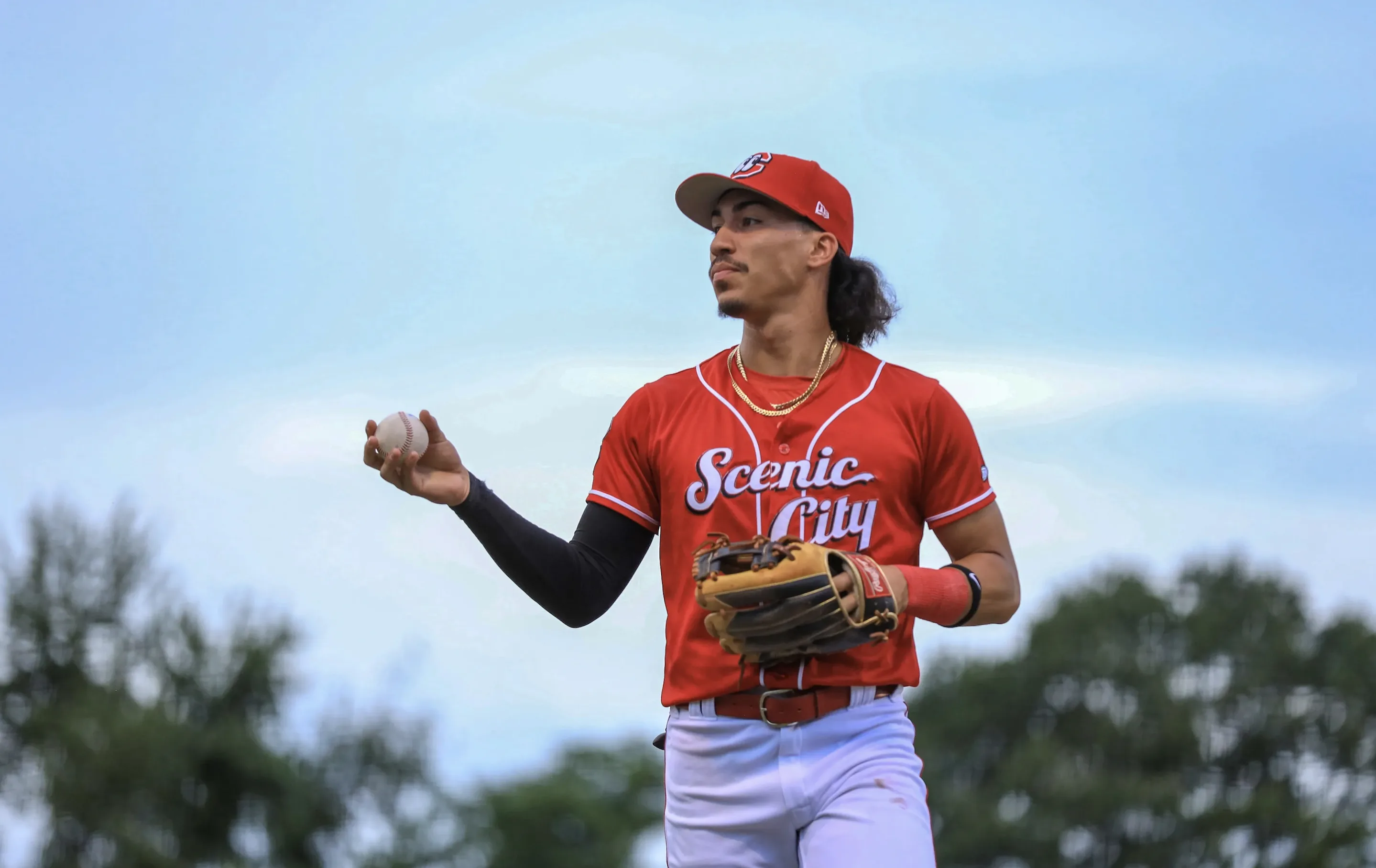
Edwin Arroyo is the 22-year-old switch-hitting infielder the Reds got with Noelvi Marte in the 2022 Luis Castillo trade. He lost all of 2024 to shoulder surgery, came back at Double-A in 2025 with no power. Fortunately, he recovered and has hit .344/.402/.595 with 10 home runs this season in AAA Louisville. He also has the best defensive reputation in the Reds farm system. With Ke'Bryan Hayes on the IL and an aging Eugenio Suárez carrying third base, Arroyo is the obvious internal answer at the hot corner. There's a catch, though — he's a meaningfully better hitter from the left side, which means MLB lefty specialists will be the matchup type that challenges him the most.
If you're new to baseball: The recovery time for labrum surgery is usually around 18 months, so it's not surprising Arroyo hit for so little power in 2025. It's very good to see him producing in 2026. Arroyo is also a switch-hitter, which means he can bat from either side of the plate. Against a right-handed pitcher he hits left-handed, against a left-handed pitcher he hits right-handed. The numbers in this piece say he's much better as a left-handed hitter. That matters because most pitchers in the major leagues are right-handed, so most of the time he gets to use the side that works.
The short version: He's the best answer the Reds have at third base right now. He'll probably be a useful regular, which is what the Reds really need right now. I think the number to watch when he's called up is how he hits against left-handed pitching.
Ke'Bryan Hayes hit the injured list on May 21 with a lumbar bulging disc. This is a pesky injury that saps your power and takes a long time to heal. Unfortunately, this isn't the first time Hayes has had back problems, so there's no telling if and how he comes back. To fill in the gap, the Reds are playing Eugenio Suárez at third. Unfortunately, he's 34 and he's better at DH. Inevitably, the Reds are gonna have to burn an option on one of their many infield prospects to fill to stabilize the hot corner.
Enter Edwin Arroyo.
Maybe you've heard of the guy. He came to Cincinnati with Noelvi Marte in the 2022 trade that sent Luis Castillo to Seattle (which caused me to swear off Reds baseball for the umpteenth time). Up to then he'd been one of the Mariners' top middle-infield prospects, a 2021 second-round pick out of Puerto Rico who racked up 49 extra-base hits as an 18 year-old in Single A. And while Reds fans were calling for Nick Krall's head for trading away Castillo, it did look like we were getting in early on a future shortstop.
But then he got hurt. In spring training of 2024, he dove into first base on a routine play, tore his left labrum, and lost the entire season. (Not so fun fact, this was also when Matt McLain tore his labrum while diving during spring training.) When Arroyo came back in 2025 with Double-A Chattanooga, he looked good defensively and hit .284 with 23 doubles. But he also only managed to hit three home runs all year.
I think it's much easier to regain power than your hit tool. In retrospect, 2025 was the kind of season where the org politely says a guy is still building back as you stop checking the box scores.
Edwin Arroyo's path to Triple-A
In Triple-A Louisville this April, Arroyo showed up and started hitting like his shoulder injury never happened.
Through 48 games he's slashing .344/.402/.595 with 10 home runs and 8 steals. Baseball America's Hot Sheet has ranked him in the league-wide top 12 prospects for two weeks running. Baseball America's RoboScout has him as the second-best Triple-A hitter in all of baseball. He also getting reps at shortstop, second, and (notably) third base. With Hayes shelved and Suárez silently yearning to return to DH, the case for calling him up has crossed from speculative to legitimate.
The skeptical version of all of this, is that 226 plate appearances at Triple-A is two months, and two months can be anything. Hot streaks happen. After all, we've just watched Rece Hinds go from AAA Player of the Week, to swinging-at-everything-and-hitting-nothing, to DFA'ed, to traded to the Marlins. There's definitely cause to temper one's enthusiasm.
Plus, the pre-injury scouting reports pegged Arroyo as a contact-and-glove guy with maybe some gap power, but definitely not a middle-of-the-order bat. He'd hit 13 home runs at High-A Dayton in 2023, the year before the labrum surgery, so it's not like he was hitting the cover off the ball.
And yet, I am cautiously optimistic about his prospects. First, we don't need him to hit a ton of home runs — we need him to drive in runs. The number of runners this current iteration of the Reds leave stranded on base deserves an Earl Pitts monologue. The bottom of the Reds order is particularly bad. There's more excitement on I-70 between Dayton and Indianapolis. Arroyo has a .287 xBA in AAA this season. If he can hit anywhere near that in the 7-8-9 hole, it's an improvement.
Additionally, Arroyo's ground-ball rate in 2025 was 51 percent. It's now only 35 percent. Like I said when JJ Bleday was called up, this big of a decline in GB% isn't a hot streak, it's a sign that a batter's changed their swing decision and/or swing mechanics. His strikeout rate barely moved, dropping from 16.9 percent at Chattanooga to 15.5 percent at Louisville, but it didn't need to move. He was already striking out at a manageable rate. What changed is what happens when he does make contact. For what it's worth, his coaches say the improvement boils down to him spitting on bad pitches and jumping on good ones.
It isn't only the Reds working with him, either. Arroyo says the only hitting coach he really talks to outside the org is his dad, also named Edwin, who taught him to throw left-handed as a kid after a right-arm injury. "He watches every game," Arroyo recently said. "The main thing is just trying to be consistent. Right now, it's happening, so I gotta keep going." The org credit and the family credit point at the same story: a kid getting good coaching from a lot of directions, finding a version of himself that works.
Some of this you can see in the Statcast numbers. According to Prospect Savant, he's averaging 90.4 mph off the bat with a hard-hit rate of 42 percent. His max exit velocity at Triple-A is 109.1 mph.
The plate-discipline numbers tell the same story. His whiff rate is 19.5 percent, meaningfully better than the 23.7 percent he was running through early April on roughly half this sample. He's also making contact on more than 90 percent of pitches in the strike zone. None of those are elite numbers. But they align with the contact profile you'd expect from a solid everyday big leaguer. Again, what else can the Reds ask for in May 2026?
View data table
| Metric | 2025 AA | 2026 AAA |
|---|---|---|
| Strikeout rate | 16.9% | 15.5% |
| Ground-ball rate | 51% | 35% |
| OPS | .716 | .997 |
Don't get fooled by his gaudy slash line...it will regress in the bigs. Like I said earlier, his xBA is .287 and he's currently hitting .344. His expected slugging is .482 against an actual .595. I think if he spent the rest of the season in AAA, he'd likely finish with a.290/.360/.500 slash line. Optimistically, this could translate into is something like .265 with an 18-home-run pace in the majors. These numbers, with his glove, is much better than what we were looking at with an ailing Ke'Bryan Hayes at third.
Another big thing to look at is Arroyo's splits. While he's a switch hitter, he's likely to be platooned in Cincinnati. Against southpaws, he's hitting .235/.305/.373 in 59 plate appearances. His vs LHP OPS is .678. Against right-handed pitching, he's hitting .365/.421/.649 in 164 plate appearances. His OPS vs righties is 1.069. That's a 391-point gap.
Additionally, his strikeout rate is four points worse from the right side, his whiff rate is six points worse, the walk rate is three points worse.
Here's what got me to look twice, though. His hard-hit rate is essentially identical from both sides: 26.4 percent as a righty, 26.5 percent as a lefty. His bat speed isn't the difference; he hits the ball just as hard regardless of which side of the plate he's standing on. The gap is contact frequency, because he sees the ball better from the left side. From the right side, he whiffs more often, even on similar pitches, and the whiffs cascade into a higher strikeout rate that tanks the slash line because he isn't making the contact that turns into hard-hit balls. But when he does make contact from his weak side, he tends to hit the ball just as well.
View data table
| Metric | vs LHP (R-side, 59 PA) | vs RHP (L-side, 164 PA) |
|---|---|---|
| OPS | .678 | 1.069 |
| Strikeout rate | 18.6% | 14.6% |
| Whiff rate | 23.0% | 16.9% |
| Hard-hit rate | 26.4% | 26.5% |
The other half of the case for promoting is his glove.
Baseball America named him the best defensive infielder in the entire Reds system in their 2026 prospect handbook. He's an above-average shortstop with quick hands, fluid movements, and a plus arm. And the ambidextrous thing pays off in the flashier moments. The showcase circuit had him throwing 96 mph from his right hand across the diamond, and his left arm, the one his dad worked with him on as a kid, is still in the toolkit.
As mentioned earlier, he's been getting reps a third base. Baseball America's projected 2029 Reds lineup, published before the season started, even had Arroyo at third base. Two months at Louisville pulled that timeline forward by 18 to 24 months. So the plan was already in place. It's just a matter of pulling the trigger.
Once he gets called up, the number to watch won't be his batting average, slugging, or OBP. It'll be his how often he gets deployed against left-handed pitching. If MLB lefties expose him, he's a strong-side platoon piece with a plus glove and a real left-handed bat. If gets ABs against southpaws and does well, then he's probably going to be an everyday third baseman on a team that desperately needs one.